
Who Wants to Be an RPG Superstar?
In 2008, RPG publisher Paizo was running a contest. Called RPG Superstar, it challenged participants to design original content for the Pathfinder RPG across several elimination rounds. Whittled down from over 850 contestants to only a handful of finalists, one of those still standing was Jason Nelson.
Jason did not win RPG Superstar, but the contest brought him to the attention of contest judge Clark Peterson, co-founder of Necromancer Games. Clark had an idea: recruit Jason and fellow finalist Clinton Boomer to help launch a new company publishing third-party content for the upcoming fourth edition of Dungeons & Dragons. They got to work developing products, but Wizards of the Coast took longer than expected to release their licensing terms. When those terms finally arrived, they weren’t workable and the product stalled. But a valuable connection had been forged, and the idea of working together never quite went away.
“A few years later, on April Fool’s Day of 2011 we circled back and added Neil Spicer and Greg Vaughan to the group and coined the name Legendary Games,” Jason recalls. “We got out two products that first year, after which Clark had to step away and I stepped up to run things, relaunching in summer 2012 and taking it from there!”
A Legendary Team
Today, Jason Nelson is the Publisher of Legendary Games, overseeing a roster of over 100 contributors and an extensive catalog of RPG supplements. As the sole remaining active participant from the company’s original group of five, Jason manages a creative process that is truly collaborative. Often, he will lay out a slate of projects and then let writers and designers gravitate toward the pieces that excite them most. Other times, designers will pitch their own ideas.
The thread that ties all these creative voices together is a commitment to making projects they feel passionate about. Despite a catalog that now spans hundreds of products, Jason says Legendary Games remains a small operation at heart, one that relies on its fans as much as its own creative team.
“Really, it’s about talking to each other and to our fans, by email or Discord or at conventions or elsewhere, and about picking things to create that we think would be really fun to make and to use at the table.”
Making Games Legendary
From the beginning, Legendary Games has staked its reputation on the premise that third-party content should be as good as, or even better than, what the major publishers were putting out. Full color art, professional layout, and writers who were already working for Paizo and Wizards of the Coast. In an era when many third-party publishers were selling black-and-white PDFs at bargain prices, Legendary aimed for a higher standard.
“Our commitment to fantastic quality and beautiful artwork and layout are still 100%,” Jason says, “as is our commitment to all human-created products with no AI ever. No need to feed the plagiarism machine.”
Another thing that sets Legendary Games apart is how it treats the authors and artists who help build its catalog. Rather than one-time payments, Legendary operates on a residuals model that continues to pay as long as a designer’s work gets used.
“When you create a product with us, you keep earning not only on that product, but if your contribution gets reused in another product, like a monster you create going into an adventure or a campaign setting, you get those residuals as well. The same is true if your product gets converted to a different game system, so we all share in success.”
Tools for Your Game
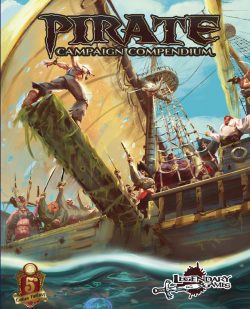 Much of what Legendary offers, in addition to adventures and rules expansions, are what Jason calls toolkits. These are supplements designed not just to add content, but to expand and improve whatever campaign a group is already running.
“Our best-selling product in our history is the Pirate Campaign Compendium, which is a toolbox for integrating nautical themes, characters, monsters, adventures, magic, and more into any campaign,” Jason says.
If pirates aren’t your thing (or not your only thing), Legendary publishes campaign guides covering horror, faerie themes, and more.
Then there are the monster books. Each of the Legendary Bestiaries features creatures themed for different campaigns, from collections of monsters from the sea or outer space to monsters fulfilling specific niches like swarms. Several volumes take a deeper approach, drawing on real-world mythology and folklore with authors and artists rooted in those cultures, covering Asian, African, Latin American, Mediterranean, and Nordic traditions.
One title Jason singles out as a particular point of pride is Boricubos.
“I also might recommend Boricubos: Latin American Monsters & Adventures, which combines the real-world mythological monsters of Central & South America and the Caribbean with a tropical campaign setting inspired by the Taino people of pre-contact Puerto Rico, from lead designer Miguel Colon and 20 authors and artists from throughout Latin America. Plus, it’s an absolutely BEAUTIFUL book!”
To the Stars…
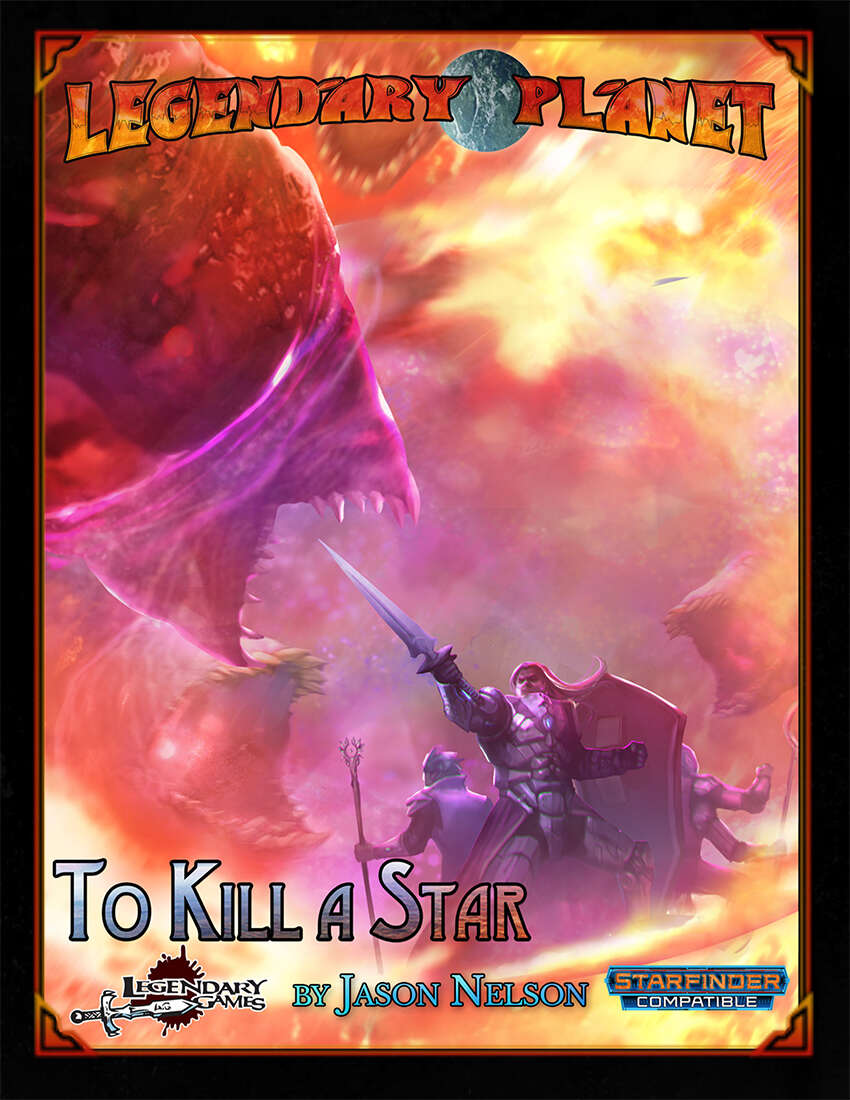 Legendary Games’ biggest product to date is Legendary Planet, a massive sword-and-planet adventure path originally published for Pathfinder and D&D 5E, later expanded to Starfinder and beyond. At more than 700 pages, bringing the book to completion was quite the undertaking. Jason wrote the final adventure himself, and it proved more difficult than anticipated.
“I got pieces of it written but sort of got stuck for months,” Jason explains. “I eventually brought on a coauthor to do part of it and jump-start my creativity, and I basically chained myself to the desk with weekly updates to backers until I got it DONE.”
For Jason, the effort paid off.
“The themes and sense of planetary wahoo and wonder, blending sci-fi and fantasy and horror and alien craziness really hold up and it feels big and bombastic,” he says. “The bad guys are really bad and they scale up as you go in a satisfying way until the big reveal to the final enemies, and the finish is most definitely NOT ‘fight the evil emperor solo in his throne room.’”
…And Beyond
The next big project for Legendary Games is a return to the company’s roots: a game called PathMaster. PathMaster is a roleplaying game that recreates and updates the classic Pathfinder First Edition rules, using the open RPG Creative License (ORC). It’s not an exact remake, but a streamlined and expanded ruleset that tightens inconsistencies in the original while filling gaps the core rules left open.
“It’s not grimdark or rules-light but heroic fantasy with detailed rules for characters and their teams… something really rich and meaty. We hope to start playtests on the completed rules this fall and be ready to launch it in 2027!”
Superstar to Publisher
For Jason, the journey from RPG Superstar finalist to full-time publisher was never the plan.
What started with a design contest and an April Fools’ Day handshake has grown into something neither Jason nor his co-founders could have anticipated: a fifteen-year career built entirely on making games he loves.
“I didn’t expect my hobby to become a side gig and then eventually my full-time job for the last dozen years, but I always appreciate everyone out there who enjoys the things we create. In a world where there are a lot of unpleasant things, being able to create things that bring people happiness is a wonderful thing.”
You can read the rest of our conversation with Jason Nelson below.
A Few Questions with Legendary Games’ Jason Nelson
The original pitch [for Legendary Games] was top-quality third-party Pathfinder content from the same writers producing Paizo’s official material. How did that reputation come together in the early days, and is it still core to how Legendary operates?
It definitely was a core part of Legendary Games’ identity in the early years, as there weren’t that many people who were working for and with Paizo who were also doing third-party publishing work. It was a mark of quality, alongside the quality of artwork and layout. At that time, for folks who might have dismissed third-party products as “homebrew” content, it was a simple counter to assure them that the people creating this were the same they were already using, so they couldn’t really make that argument against our products.
We also charged more for our products than many other third-party publishers were, but again we planted our flag on the idea of creating a premium product and that it was absolutely worth what you paid for it. Full-color art and layout. Many third-party publisher products at the time were black and white, little art, and priced cheaply but that wasn’t the market we were trying to hit.
There’s a little of that stigma now, but that’s in part because the barriers to entry in the publishing space are much lower than they used to be. Part of that is sites like Dungeon Masters Guild and Pathfinder Infinite, which allowed creators to use official artwork and layout resources in addition to official IP. Sure, they could only sell on a single marketplace, but to an extent they trained a large section of online customer base to think of those sites as the only marketplaces.
Many of those folks also embraced the “race to the bottom” pricing strategy of earlier years, so the market became somewhat glutted with product. That was before AI products put that whole thing on steroids, so there’s just a LOT of stuff out there now.
Long story short, people were not as attached to the idea of their creatives having worked for the “official companies” and, at the same time, there were a lot more of those contributors out there. What made Legendary Games distinct in the early years was no longer so unique, so it stopped being as big a part of our identity.
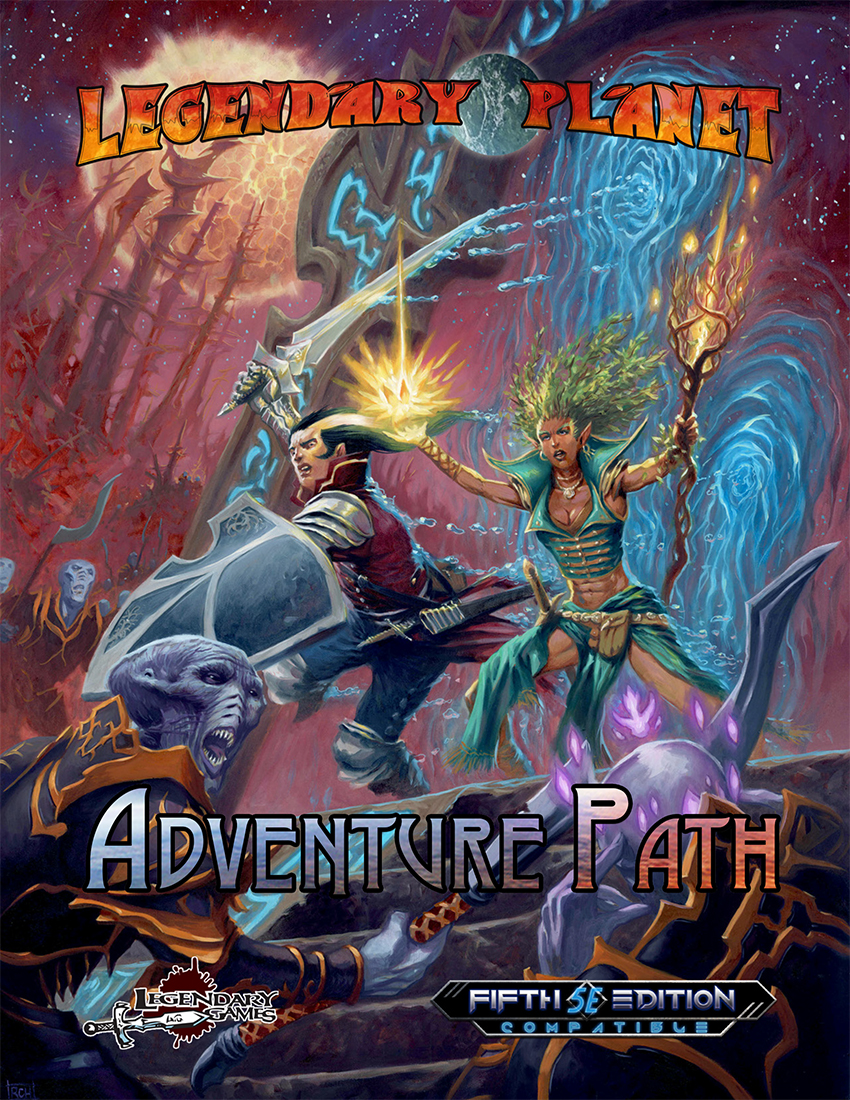 Legendary Games has its roots in Pathfinder but has also expanded into D&D 5E, Starfinder, Pathfinder 2E, and Savage Worlds. What goes into the decision to take on a new system? How does writing for one system change how you approach another?
There are several goals. As a business, of course, you want to open up new markets for products, so it’s certainly appealing on that front. D&D 5E didn’t have a formal 3PP policy when it first dropped, though there were ways you could get around that rooted in the original OGL, and that’s how we had products ready to go on 5E launch day in 2014. It wasn’t long before they started to lean into the OGL, though, and that opened things up even further. Making multiple versions of a product is also a way to help buffer the cost of art and maps, since you can use them more than once, so it alters the risk/reward ratio of doing a book.
Of course, you’ve also got to consider how a game fits in with what you do as a company. Does the genre fit? What about the artistic style of the core rules for that system? When we started doing Starfinder, we already had some sci-fi products in the can. It was a pretty natural transition. Likewise, Pathfinder to D&D both run the gamut of fantasy settings and systems. Would we do a supers supplement? That would be farther away from our usual stuff, so that would be harder for us to make the connection.
Does the game fit from a licensing perspective? We mentioned above how our early D&D 4E plans ran aground when the GSL terms didn’t make sense for us. A system whose 3PP terms have high costs or tight restrictions bound into them is probably one we would avoid.
Values are also part of the equation. The Pathfinder Compatibility License has certain specific restrictions, and they mostly agree with our values, like no nudity in artwork or excessively sexual situations or child endangerment, so they haven’t ever been a problem. There are other game systems—or creators that may be closely associated with particular systems—that don’t fit as well, and it’s easy enough to just keep on moving and let them do their thing while we do ours.
What’s next for Legendary Games? Anything currently in development you’re excited about?
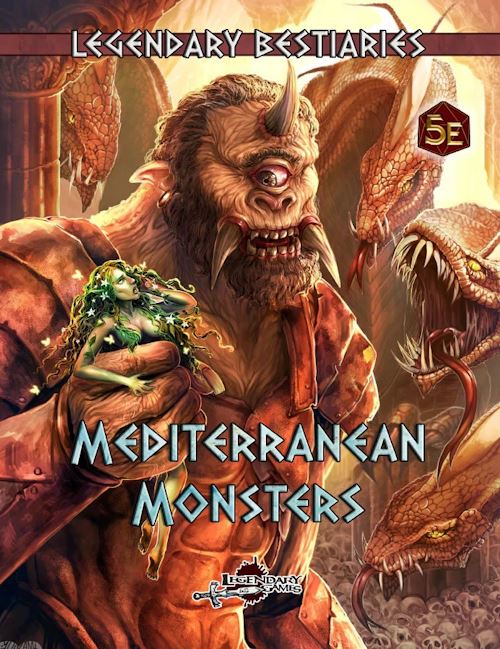 We’re always expanding our collection of Legendary Bestiaries, with “real-world” bestiaries coming down the road for Ancient Monsters from Egypt to Persia, Arabia to Mesopotamia, and more, Slavic Monsters from central and eastern Europe, and more! We also have expansive class compendiums for Arcane classes in Pathfinder and D&D coming soon. We have regular monthly releases like The Bardess’ Library for Pathfinder and The Dragon’s Hoard for D&D.


