
With the conclusion to Denis Villaneuve’s Dune trilogy coming out this December, let’s take a look at what started it all: Dune: Imperium. Yes, this worker-placement, deck-building combo created a science fiction universe chock full of fascinating characters, sand worm minis, and combat cubes. Over the years, Imperium has evolved and expanded, much like Lisan Al-Gaib’s ambitions, into an array of core games, expansions, and modules.
Today, we’re untangling this sci-fi web, because these are two of the best games to come out in the last decade. Dune: Imperium excels at tense duals, four-player free-for-alls, and in monster team-based games with up to six. That modularity makes it an ideal game for virtually every collection, because it can almost always be played with any group.
And the best games, as Baron Harkonnen often says, are the ones that get played.
How Dune: Imperium and Uprising Play
At the outset, Dune: Imperium presents a medley. A board showcases several areas, including the sandy planet of Arrakis, various faction alliances, and a more nebulous technology/political section. Each of these has spots for you to drop your workers for resources, intrigue cards (think minor game-breaking abilities), faction support, and more. You’ll be dropping your space dudes on these spots in an attempt to claim ten victory points before anyone else.
Oh, and you’ll be picking a faction and their (lightly) asymmetric deck to start with. Dune: Imperium is a deck-builder, but, like Lost Ruins of Arnak and others in this new trend, you won’t be churning your deck countless times in a game. As such, while acquiring new cards from the market is important, you’ll see them few enough times in the game as to make it a counterpart to the worker placement and combat, not the sole point of victory. This is not Space Dominion.
So you’ll drop your workers, gain some resources – or pay them, Dune: Imperium is punishing and strict in what spaces you can access, and unlocking or getting the goods necessary to reach the higher value spots is a huge part of the strategy. You won’t be able to do it all, so focus. If you’re like me, that focus is going to be squarely on the soldiers.
Every round, after each player completes their turns, combat arrives. At the start of the round, you’ll see what each battle is worth, be it a victory point, resources, or other rewards. Each side will total up their soldiers (cubes), have a chance to play boosting cards, cackle at the massive power sandworms provide, and see who emerges victorious. Then everyone dies, in Dune style, and the next round begins anew (unless you held your forces back, waiting for better timing).
Okay, that all sounds fun, so where’s this web?
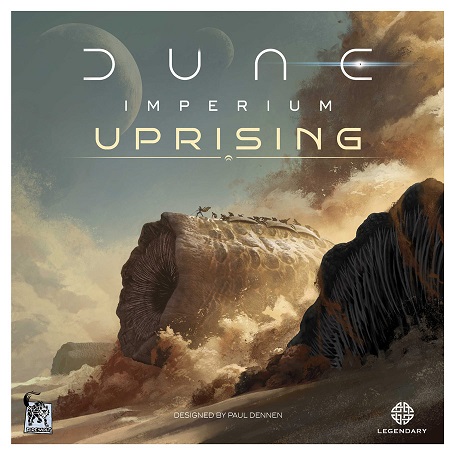 Well, like a spin-off novel in a popular setting, Dune: Imperium has a brother. Dune: Imperium – Uprising. Arriving in 2023, this is effectively a 2nd edition of the core game, adding several new mechanics (Spies! Contracts!) while refreshing all the cards and much of the board. To a new player, the added bits make the teach a little more involved, but to those already familiar, Uprising’s adjustments make a great game even greater. What’s more, expansions for Imperium, Immortality and Rise of Ix, are cross-compatible with Uprising.
And, of course, Uprising has that six-player mode.
Does that make Imperium obsolete? Not quite. As noted, it’s an easier game to jump into (and still excellent) than Uprising. Your options are tighter, making every move count for more while reducing analysis paralysis. It’s also, for what it’s worth, cheaper. If I were choosing one, Uprising would take my vote, but Imperium might be the right choice for your group.
But, like a sci-fi story with a plot thread left to pull, you won’t stop there.
The Dune: Imperium Expansions
To date, the Dune: Imperium universe has had three expansions. All are theoretically compatible with either base game, though, in a word of warning, base Dune: Imperium expansions won’t impact Uprising elements like spies. And Bloodlines, the first post-Uprising expansion, has some content that can’t be used with base Dune: Imperium.
Still, if you and your group fall in love with Dune: Imperium, and it’s likely you will, the day may come when you’ll throw every expansion into the game and never look back.
Rise of IX
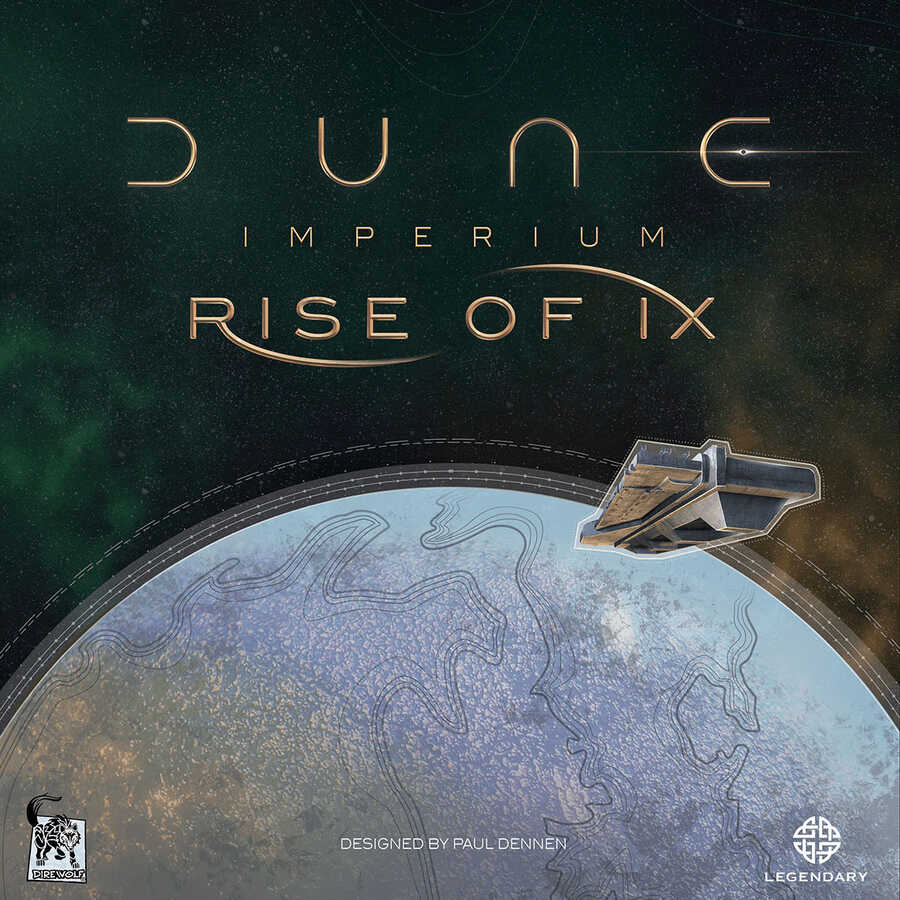 The first expansion, Rise of IX proves an example of what’s to come with all of these: a medley of improvements and additions that are best added in from the get-go with players versed in medium-heavy euros. Here we get a few new faction leaders from Dune deep cuts, like Prince Rhombur Vernius, with their unique abilities to shake things up. Technologies make their first appearance, adding persistent benefits, like earning a free water for winning a conflict, that are significant without breaking the game. Dreadnoughts, a longer ‘epic’ game variant, and more cards to juice the deck-building round it out.
All told, Rise of IX is a great first expansion to the base Dune: Imperium. It’s less necessary if you’re getting Bloodlines for Uprising, as the two serve a similar purpose in broadening the game’s scope without huge new features.
Immortality
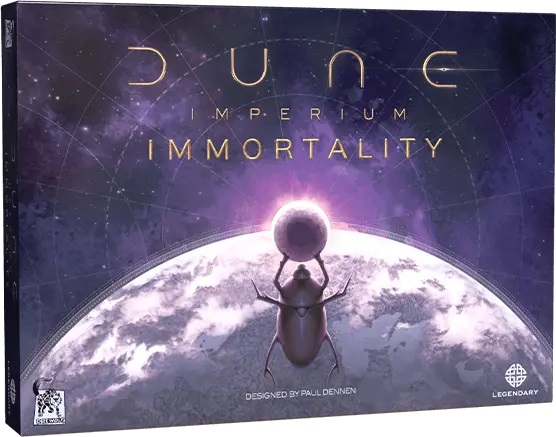 If Rise of IX added a buff medley that colored within the lines, Immortality is the gonzo expansion made for players that want to live on the edge. A whole new sideboard and tracks, a card grafting mechanic to empower the cards in your deck, and, yes, ways to use corpses to get even more powerful, stranger cards. This comes alongside the standard suite from any Dune: Imperium expansion: more cards, both for your deck and of the intrigue variety.
Are the possibilities offered by Immortality neat? Absolutely. It’s a whole new side game to play, that can make your turns sing as the game careens towards its later stages. The usual worker placement tensions start to fuzz with all the possibilities – you’re almost always able to do something cool, so blocking becomes a negligible concern. Immortality also plays just fine with Bloodlines and Uprising, making it the better choice of the two initial expansions for Uprising players.
Bloodlines
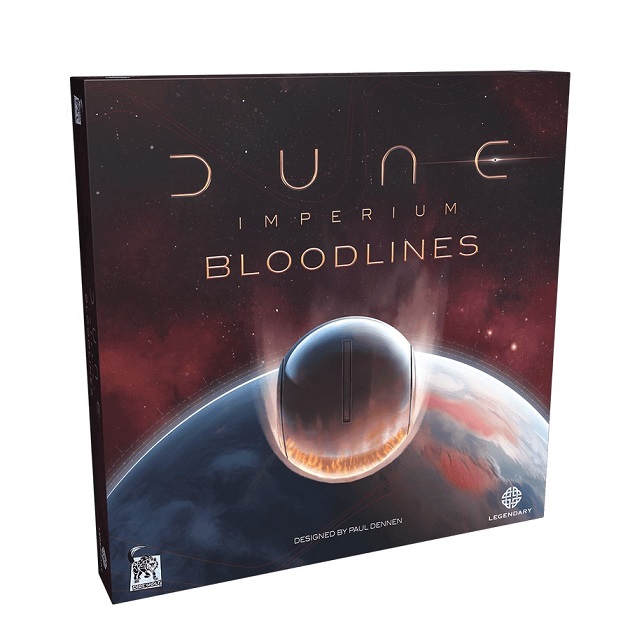 Speaking of Uprising, Bloodlines is the first expansion for that, er, version of Dune: Imperium. First, the Sardaukar provide a combat counterpoint to the sandworms, providing an avenue to use solari (cash) to greater effect. As sandworms can double conflict rewards, resulting in big chunks of victory points in later rounds, having a ready way to smack those dune tubes around is nice. Rise of IX’s technologies return too, tweaked to play well with Uprising’s spies and contracts. Again, time has proved valuable – technologies are easier to earn this time around, with any green space affording you the option, so you’ll see more of these enter play. Always nice when a mechanic is actually relevant. More leaders and cards round out the offering, a standard (if appreciated) buff to the roster.
All in all, the expansion roadmap is pretty well set at this point. If base Imperium is your thing, then IX is almost essential, with Bloodlines filling the same role for Uprising. Immortality remains the more-is-better expansion, best for those that have either Dune: Imperium game in their steady rotation and want to mix things up.
The Six Player Spice
For all its quality, the part, to me, that makes Dune: Imperium – Uprising stand apart from the vast forest of medium-heavy euros is the six player mode. Akin to Memoir ‘44’s Overlord, this game morphs Uprising from a free-for-all into a two-team epic contest. Two players assume leadership of their respective sides, playing either the Emperor or, uh, Timothée Chalamet, with unique decks and essentially playing a metagame. Their actions serve to buff or desolate their teammates or their opponents, actions made even more compelling by the option, with certain cards, to trade resources. See, the other two players on the team are essentially playing Uprising as usual, placing their workers, gaining intrigue cards, hiring soldiers for conflicts.
But then your commander comes asking for a few coins, or water, or soldiers to sacrifice for their next play. Can you adapt your own strategy to feed your leader’s success, and can they shepherd those resources to better ends? There’s also dynamism with a teammate here, deciding whether to burn a turn throwing troops into the fight to open up your pal’s actions, or vice versa. Every action carries more weight, as does the eventual victory.
Yes, you’ll want experienced players for this one, particularly as the commanders, because judging whether siphoning those resources or directing a player to gain some Bene Gesserit faction points makes sense isn’t easy. Play time will also balloon, taking a one-two hour game and more than doubling it unless your group plays snappy.
But when it comes together, it’s a unique adventure. One well worth the reasonable price of admission to this particular sci-fi odyssey. Oh, and with another expansion coming this fall, there’s plenty more Dune to be had.
After all, the spice must flow.


