
Look at a table on the eve of a miniatures war game, and you’ll see creativity wrought by many hands. The figures themselves, crafted by artists and painted by, well, artists of a different sort. You’ll see terrain, sometimes pieced together from intricate kits, other times made of whatever happened to be at hand. Dice, rules, measurement tools, and a whole host of strategies and tactics sprawl out from this creche. If you’ve played one, a Legion or a Warhammer or a Battletech, you know.
If you haven’t, your opportunities have never been better. Those big boys above offer endless chances to indulge your imagination, but they’re far from the only options in this game. Several relative newcomers have splashed onto the scene with compelling ideas, fantastic figures, and whole new worlds to explore.
And, of course, enemies to destroy.
First Blood
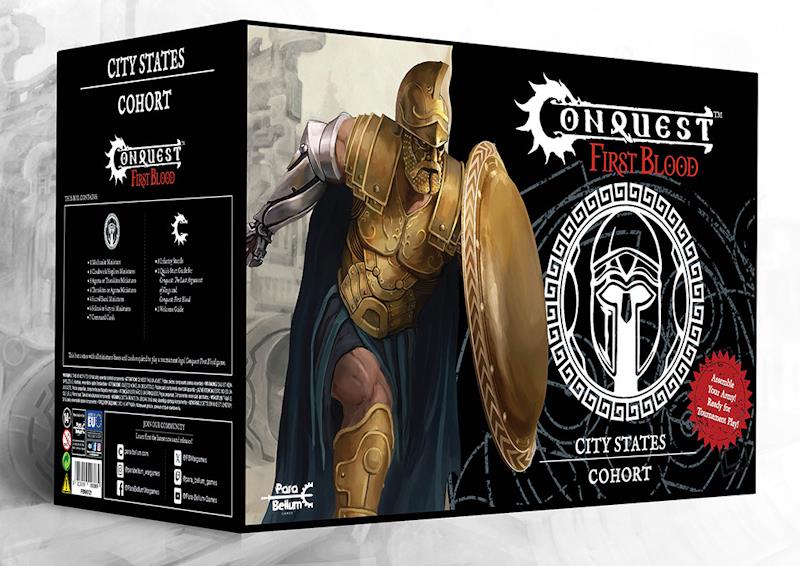 I find myself endlessly drawn to Conquest: The Last Argument of Kings. Its name carries a certain weight, a fantasy epic wrought into tabletop form. Yet a mass battle game like Conquest isn’t always an option: time, cost, or the sheer inertia in getting so many minis onto the table can make it hard to indulge. First Blood is the antidote, and it’s one we’ve talked about before.
Now, though, we have proof. Para Bellum has continued to improve and embellish First Blood, growing it from a fun alternate mode using the same units as Conquest into a full game in its own right. Stripping down your force to a couple dozen units makes for tight battles, where weak spots in battle lines are magnified and individual heroics emphasized. Terrain makes a bigger impact too, with height advantages and randomized elements making it harder to create a ‘cheese’ army that exploits a standard map.
In other words, you have more room to craft your own force rather than following the meta.
Moment to moment gameplay in First Blood is close to Age of Sigmar: Spearhead in its heft and gameplay. You’ll activate a unit on your turn, moving and using every figure in it to attack, unleash an ability, or gobble up objectives. Led by a singular hero, the outcome can be decided quick – most games reach a decision within an hour for experienced players – but you’ll earn those wins or suffer those losses thanks to your choices more than luck.
Say you wade into battle with a big stone giant eating up a big chunk of your army’s points. That giant might make mincemeat of hapless cavalry or wade through chaff infantry without issue, but if your opponent’s packing a strong fire attack, you’ll want to sneak an ambush around and remove the threat. Alternatively, use that giant to suck up your opponent’s attention while your other troops claim objectives. These are basic ideas, but the scaffolding to build deep plans dripping in theme are everywhere. Better still, if your plan fails, you won’t have to spend hours flailing towards a loss – First Blood means to keep you in the action and does.
Then, when and if you decide to upsize, you can use the same models in Conquest. The ol’ two-for-one game deal, not to mention the plethora of miniature-agnostic RPGs and war games that’ll look great with your First Blood figures.
Dropzone Commander
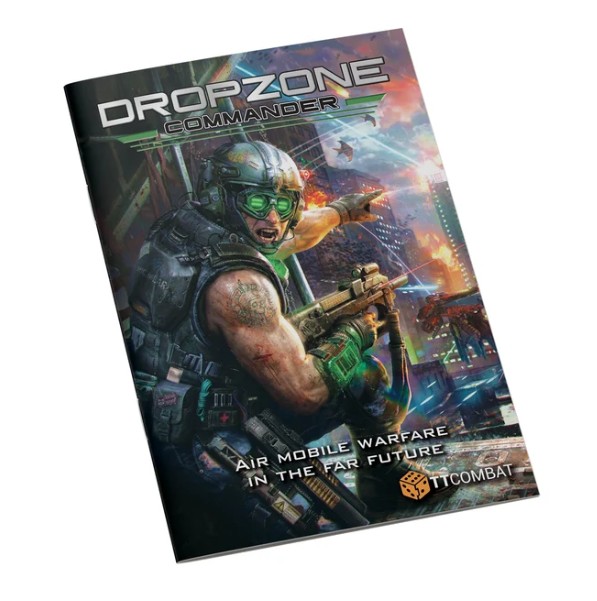 If you played Halo ODST or watched Starship Troopers (didja remember Noble Knight carries DVDs?!), and thought it’d be rad to dive into a big high tech war between humans and aliens (here, the bioficers), Dropzone Commander is your game. Originally launched in 2013, this 2026 3.0 refresh punches up this mass battle game (meaning lots of figures, though here those figures are often hulking mechs, assault shuttles, and tanks) with a great two-player start set and plenty of other options.
But you’ll find Dropzone Commander strikes hard in the gameplay.
The thesis here is well-founded and right there in the title – you’re playing as a titular commander, with an array of options at your disposal, rather than a god thing manipulating figures according to your whims. That commander role has you deciding on battle strategies, like airdrop redeployments, air strikes (which can be countered), how to arrange your battle groups, and when to play your ability cards. Some of those are present in other miniatures games, but none mix all of this together into a frenetic, clean sci-fi smoothie.
Take, for example, those battle groups. In DZC you’ll literally have Raven troopships dropping your marines on an objective, then, once your tanks punch a hole, picking them up again to race behind enemy lines in a pincer. You’ll activate these groups in alternating fashion, keeping both players invested as turns flip frequently. There’s also interruption options with anti-air and other effects, making the battlefield feel dynamic and less like the world’s frozen in time as figures march around the map.
Those maps are fun, too – befitting DZC’s scale, the soldiers are tiny, the mechs and tanks solid, and the buildings often towering. Having a drop ship take your troops to the rooftop will feel like scaling a massive structure, less like a goofy hop. Cover provides bonuses that feel legit, whether that’s because you’ve claimed those heights or you’re hunkering down behind a heavy tank that is actually larger than your units.
When the lasers and bullets fly, combat is easy to resolve with a batch of D6s, though not the buckets you’ll find in most games. Again, nods have been made towards the sci-fi setting and tech involved. Some units will have countermeasures – blast away within range, and you might find yourself getting targeted in turn, or your assault might fizzle out. It’s an easy way to keep the battlefield interesting as units jockey between holding objectives and finding targets that won’t tear them to shreds. That objectives are the primary way to win only helps here – mobility, appropriate counters, battle group composition are all emphasized over just smashing the enemy to pieces.
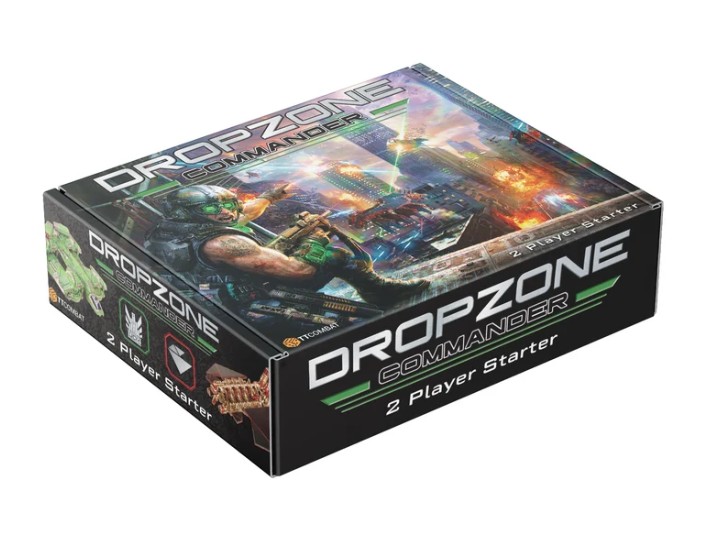 Getting into Dropzone Commander is easier now than ever before thanks to that new starter set (there are other armies with fresh boxes coming too) which has enough for two players to go at it with real armies, not small batches. You’ll also get maps and cardboard terrain too to get a full playable battlefield. 10 sprues of models (yes, you’ll be building and painting these, but the assembly is relatively simple, and I can attest that painting mechs and tanks is far easier than intricate Warhammer heroes).
All told, DZC is a perfect flavor change for miniatures war gamers – full of action, lasers, and fun.
Starcraft
Although, if you want a flavor change, it’s hard to get one more unique than Starcraft. We previewed this one a while ago, but now it’s here in its first full edition, and it’s pretty darned sweet. I say that for one reason more than the rest – Starcraft takes a big page from its RTS roots and has you literally spending resources during the game to bring in new units rather than deploying your whole swath from the get-go.
This change has so many great ramifications. First, both sides will often have a small number of units on the board at any one time. You’ll have an army-sized force, yes, but as they get blasted and new units brought in, the overall number both players will manage won’t generally get huge. As a result, turns are fast, the board state is easy to read, and you have the immediate blend of tactics during the turn and strategy with what you’ll be producing to counter your opponent’s efforts. Second, this prevents the bad luck wipe that can happen early in other games, when a bad roll or effect obliterates a key element of your army and now the game’s doomed almost from the get-go. Here, while you’re still limited to the units on your army list, you can tilt a different way. And third, these limits are driven by a scenario drafted by both players at the outset. You won’t know how much of your force you’ll be able to deploy, and what tactics cards (the abstract base-building element) you’ll have available. It’s such a fun twist.
From that unique foundation, you get an otherwise exceptional and familiar alternating activation miniatures war game. You’ll have terran marines blasting zergs, Protoss beaming everybody, and classic heroes like Kerrigan doing their signature moves. It’s early days too, meaning Starcraft has tons of room to grow – though the fan base is doing its part, with solo rules and a narrative campaign already developed and available on BoardGameGeek.
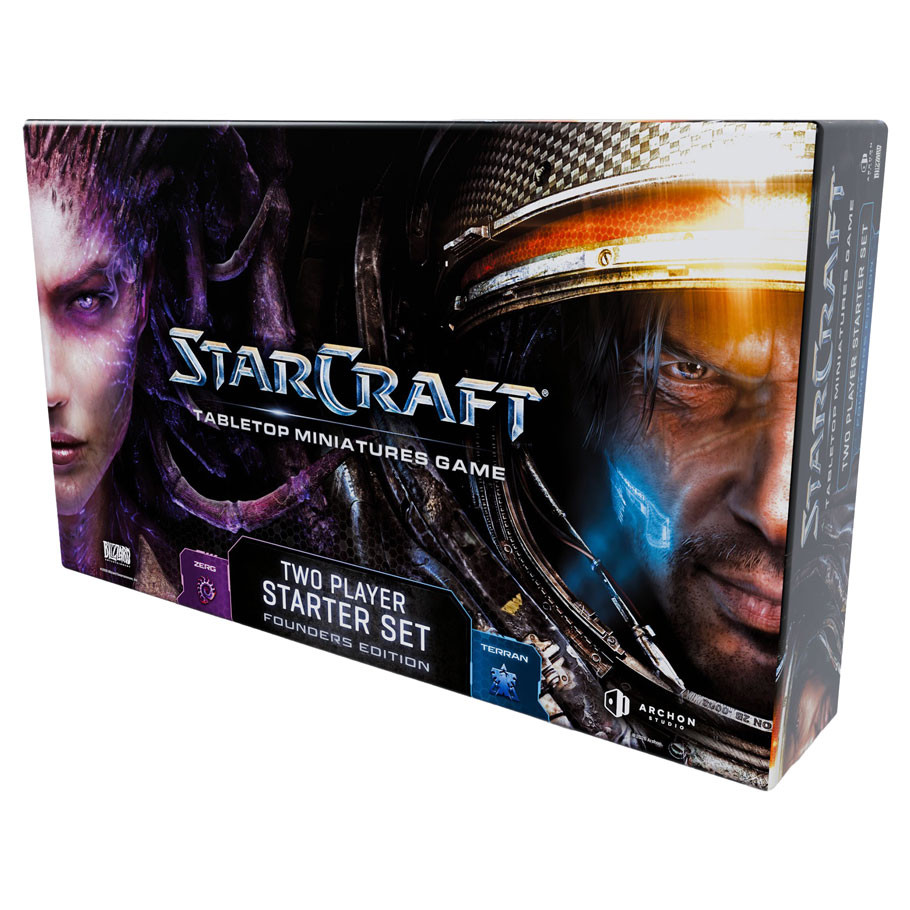 Your best move to jump in is grabbing a copy of the 2-player starter set, a predictable battle between the Terrans and Zergs, or, if blue crystals are more your thing, the Protoss Founders set works well too. From there, expansion boxes bulk out your army, add heroes, and, goodness, provide some excellent painting options. One thing about Starcraft – this color palette pops!
Anyway, all told, all three of these games are modern, fast, and fun, the perfect antidote to the lapsed war gamer (or one who’s never tried it in the first place). Dive in, and don’t forget to bring your fresh armies to your local store’s game nights!


