
For those paying attention to the news, you may have seen a few blurbs about a couple blokes attempting to play the legendarily complicated Campaign for North Africa, a game so focused on the simulation (measuring, say, the water supply for your troops, and varying the need on whether they’re Italian, and thus have to boil pasta, or German) that it’s liable to make any attempt descend into madness.
Should those stories have sparked some curiosity about that theater, the North African campaign during World War Two, fear not – here’s a list of great games, in order of complexity, that’ll immerse you in these classic battles (and actually let you play them).
Quartermaster General South Front
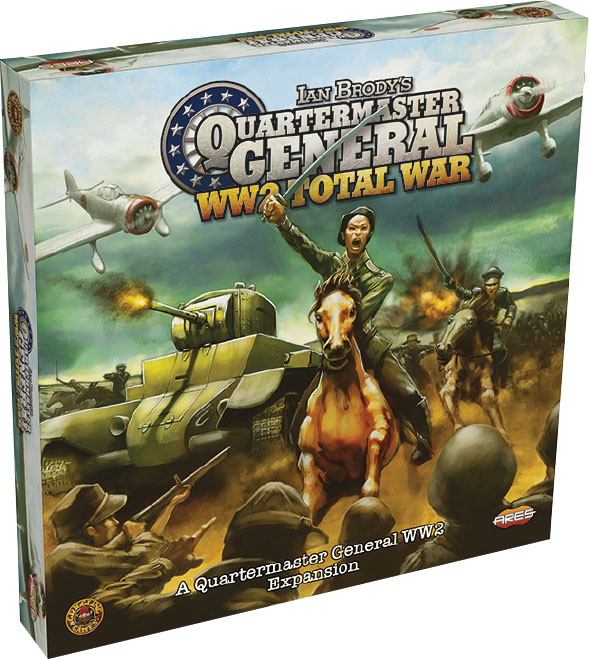 Over the last few years, the light war gaming series Quartermaster General, beloved for its team-based WW1 and WW2 games, has taken a spin through a series of smaller fronts as two-player duels. South Front is among the most recent, pitting Axis against Allies in the Mediterranean and North Africa (shocking for this article, I know). The QMG series relies on each player picking from a hand of cards, drawn from a faction-specific deck. Those cards are used to move units, battle, plot ambushes, and so on. It’s a streamlined, simple rules system that derives much of its strength by presenting a limited set of options to you and saying, how are you going to screw it up this time?
In South Front, the real test for the Axis, as it was in the war, is to take as much territory and score the associated VPs as fast as possible. You won’t have the resources to outlast the growing Allied strength, so being clever and aggressive is key. Because combat is deterministic (no dice – you attack, the enemy loses a unit, barring a reaction card), you’ll have a decent idea of what you can accomplish with an offensive. Supply lines are present and key, making an efficient strike to cut-off the enemy can save you many turns (and the anguish of not having a needed card). It’s a tense dance that makes for a great introduction to war gaming concepts, and plays within a couple hours or less.
Should you enjoy this one, and you likely will, then you have a whole, wonderful series to explore.
Rommel in the Desert
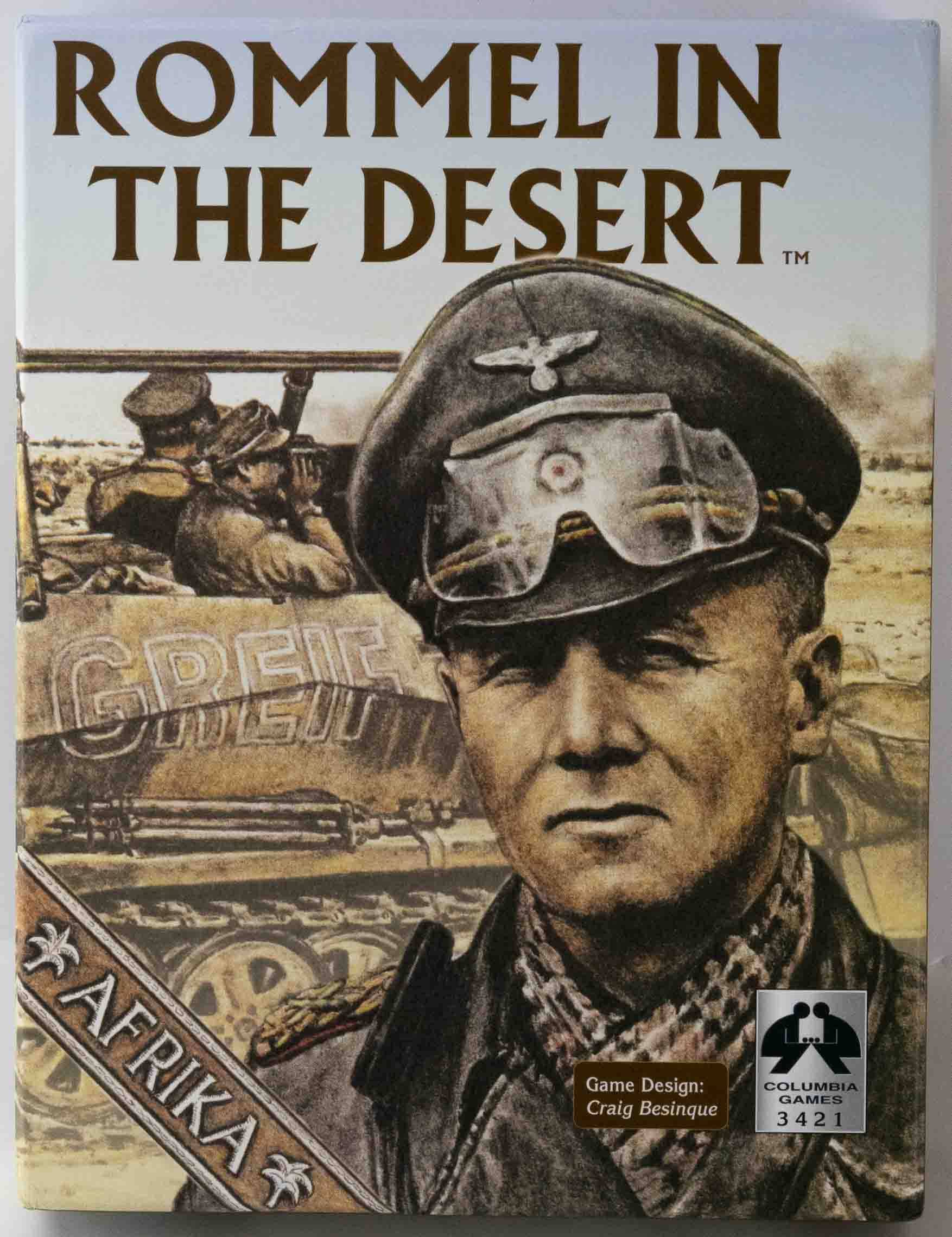 Stepping up a smidge in complexity, we get to the classic block war game Rommel in the Desert. Like South Front, Rommel pits two players against one another in a dash across the sands. As a Columbia block war game, where each ‘counter’ is a wooden piece with, sometimes, up to four steps (as opposed to two, either side, of a flat counter), Rommel emphasizes fog of war. Until forces clash, you won’t know whether you’re facing armor, infantry, or a sneaky truck that’s cutting off your supply. That last bit is crucial – Rommel’s secret sauce is in the chess-like dance the Brits and Germans must perform to survive.
Unlike many other war games, where counters shove into one another and dice are rolled, Rommel emphasizes probing attacks, strategic retreats, and rewards timely strikes with brutal routes, where wounded divisions might scoot back far enough to leave reinforcements in tenuous positions. You’ll still roll plenty of dice in actual battles, the hit system following standard Columbia block rules, but you might want to test an outmatched battle just to see what’s lying in wait, or attempt to lure your opponent in with a weakened unit.
See? Dance.
The map drives all this, with the roads matching North Africa’s infrastructure at the time. You’ll fly along the coastal routes easily enough, both making reinforcing easy but also making any breach in those lines disastrous. Cutting through the literal desert is slow, but, done with the right timing and unit mix, could result in a devastating encirclement. Can you afford to pull enough strength from the main conflict for such a move? Can you bluff your way to it?
Ultimately, Rommel offers several hours of cerebral desert warfare. It’s easy to recommend for fans of Columbia’s block war games, simply because the rules will be a snap to learn (for newbies to the system, I’d actually recommend staples like Julius Caesar first – it’s also great, and lighter). The new(ish) third edition looks great, and if you want your blocks to have plenty of room, grab the neoprene map (twice as large as the original board!).
Panzer North Africa
Designer James Day and his Panzer series know what they’re about – tanks, tanks, and then, for good measure, a few more tanks. There’s infantry sprinkled in for flavor, and yes, if left alone, they can be annoying, but it’s the tanks we’re here for. Panzer – North Africa takes the rolling treads to the desert sands in a game that won the 2024 Charles S. Roberts war gaming award for Best Game. Why?
Because it does those tanks so darned well.
Panzer operates at a platoon / squad level, with every individual unit modeled with a counter. But they’re more than cardboard chits: those big tanks have, like the starships in Starfleet Battles, all sorts of specific stats that help you use them tactically. Understanding which weapons can fire where, and what type, all factor, as does a tank’s armor rating for each side and rear. Even as you roll them around the map boards (12, double-sided, with plenty of terrain to make customized scenarios), you’ll need to plan your facing. What you won’t have to do, unless you so choose, is handle reams of rules.
In one of the better modern design trends, Panzer includes both basic and modular rules, letting you tweak the experience to fit your preferred level of simulation. Want to throw in everything to ensure your front gun takes elevation and relative armor penetration into account? Go for it. Want to eliminate infantry entirely and ignore their rules for a fast tank-only duel? You got it. Coupled with a chit pull activation system and scenarios that can play in half an hour, and Panzer is a small scale wonder that can fit just about anybody’s time, budget, or complexity preference.
North Africa ‘41
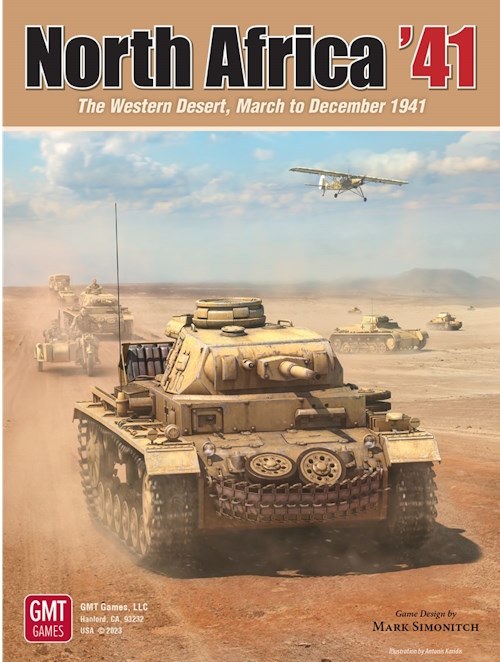 Mark Simonitch and GMT’s partnership has resulted in a bevy of great games (we wrote about some of them here), and this 2023 release (expanded this year!) is another winner. North Africa ‘41 gives you a big desert map, a bunch of counters, and nigh endless possibilities. From the outset, the battlefield is more wide open – Simonitch doesn’t use zone-of-control bonds here, the concept where groups of units could block empty hexes between and around them. That little tweak, perfect for this theater, opens up opportunities for fast flanks. Really, dynamic play abounds in this design, which is flush with fun minor bits that have little rules load but add narrative weight – like bonuses for convoying supplies at night or weighing penalties for accepting Luftwaffe help.
North Africa uses a swift impulse system, limited by season, to force players into difficult decisions. Supply is a constant concern too – both in the literal sense and protecting the trucks you’ll need to keep infantry moving with your armor. You’ll generally want to be cruising too, as victory here comes from victory points scored through airfield control. If the Axis controls three or more, they get a point at the end of each season. If not, the Allies do. First to twelve wins. It’s clear and easy to understand who’s winning, and what you’ll have to do to get control back. Then again, doing the obvious plays right into your opponent’s hands.
For veterans of Simonitch hex-and-counter games, North Africa ‘41 shines. Particularly with the optional mounted map. The total campaign isn’t a fifty hour monster (playable in a weekend with a couple of dedicated days), the production is quality, and, thanks to all the juicy decisions and a friendly events table, it’s a game you’ll want to see on the table again and again. If you’ve never tried one of these, I’d recommend diving in with Salerno ‘43 first, as it’s a smaller, somewhat easier game that does a great job guiding you into this brilliant series.
DAK 2
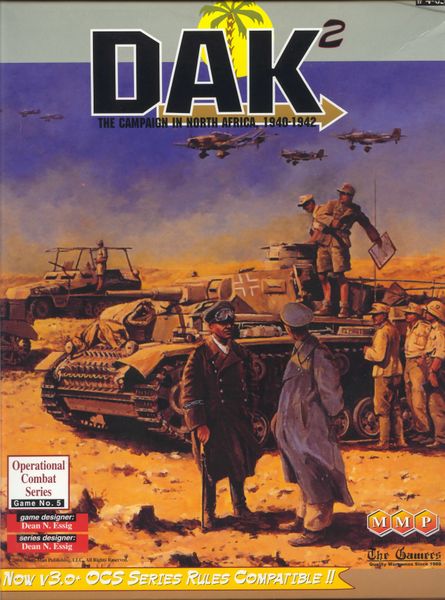 Speaking of brilliant series, Multi-Man Publishing’s Operational Combat Series (OCS), is about as big and bold as it gets. Over decades, OCS has covered many, many of the 20th century’s biggest conflicts and, naturally, North Africa is right up there. DAK2, first published in 2004, is a sweeping simulation (albeit a tad more playable than the big one we touched up top) covering the entire theater from start to finish. There’s 17 scenarios in this box, urging you to resist the full campaign’s siren song until you’re good and ready (which might mean starting with the smaller-scale Tunisia II first), because when you are, there’s little else that can match OCS for sheer scale.
See, when I say there’s over 1500 counters in this box, that’ll either fill you with dread or excitement. If it’s the latter, then you get to play with an intricate and living rule set (always, before starting an OCS game, check to make sure you have the latest version handy – it’s a testament to designer Dean Essig and Multi-Man Publishing that they’re continually refining this series) that has you as involved with logistics as with chucking dice. When you get to it, combat factors in a whole lot more than just numbers – there’s terrain, armor penetrating ability, surprise factor, and (yes) whether you have the supplies to make the attack at all. These rules make sense, and, for someone with war gaming experience, can be reasonably conquered when paired with some fun learning scenarios.
But that’s why DAK 2 is down here, at the article’s end. It’s the real conclusion to the North Africa adventure – for the grandest, but still playable and fun North Africa war game, this is it.


