
To boldly go into the world of Star Trek board games is to be confronted with something of a conundrum. See, there’s almost as many games as there are Trek TV series (har har), covering every bit of the hobby space. You have CCGs, miniatures war games, complex card games, 4X-style board games, and, obviously, Monopoly. Or this Monopoly. Or that one.
But today we’re going to skip all those bright, shiny games (good though they may be) to make Captain Kirk proud, and dig into a pair of interconnected classics, ones still receiving rules updates, still faithfully enjoyed by many, and still very much worth your time. Put on Alexander Courage’s classic intro theme, and read on to discover (or rediscover) Star Fleet Battles and Federation and Empire, both still going strong decades after their initial release.
Star Fleet Battles
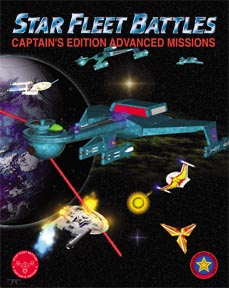 We begin with the sprawling dark of space, conveniently split into a clean hex grid. Star Fleet Battles, originally published in 1979 by Task Force Games and, like the Ship of Theseus, continually reinvented since with new modules, updated rules, and so on by Amarillo Design Bureau (ADB), is a game of starship warfare. Unlike, say, Star Wars: Armada, the ships of Star Fleet Battles come in counter form, a legible simplicity that is much appreciated as the rest of the game packs an immense depth. You’re generally not commanding fleets either, but one core ship and possibly some fighter support. This is more than a dice chucker, it’s a deadly stellar dance.
Star Fleet Battles can consume you, if you let it.
The game begins easily enough. A scenario decided (many culled from Star Trek’s TV series), that big hex grid laid out. Your ship’s square drops in, and then you look down and realize your ship isn’t just a counter. It’s a living vessel, represented with a sheet stuffed with stats, options, and a story to tell. You’ll look across the table at your opponent and see, at a glance, just how many more shields they have, or how strong their phasers are. It’s a minimalist graphic design, but it’s so effective your imagination easily fills in the chrome.
Gameplay kicks off with simultaneous movement plotting and energy allotment. Maybe you’ll want to buff those shields or pump energy to the engines for an extreme maneuver. After you’ve assigned energy where you need it, movement kicks off. In a fascinating design that still feels novel today, ship movement is simultaneous as well, taking place over a series of quick impulses. If, during one of those, you want to launch a missile or engage another system, you can. At first, this is going to feel a bit strange, but after a few rounds, there’s a magic to this. Fantasy Flight’s X-Wing does a pretty good dogfight, but the cinema evoked by these counters moving together is special.
Scoring a hit means a dice roll bent by your unique ship’s abilities – important, because Star Fleet Battles has grown to a huge number of ships and factions over the years. A strike will knock out shields or systems, checked off on the sheet, and you will feel that impact. This isn’t often a game of one-hit kills, but a gradual annihilation, and the decisions made to keep your damaged sides out of harm’s way while still dealing death to your opponent gives SFB the juice. It’s not generic ‘life’ or ‘hit points’ you’re depleting, but the left engine or the forward shields.
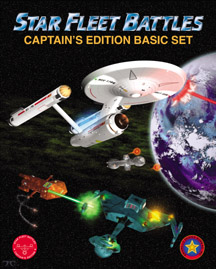 SFB isn’t a short game, in part because lining up hits and punching through shields takes more skill than random luck. But an hour or two in action (and much, much longer if you’re using expansions to do fleet battles and the like) gives these duels an epic feel. Similarly epic is the amount of SFB content over the years. Getting it ‘all’ is an endeavor, as is navigating the plethora of new editions, expansions, and riffs on the core mechanics. Given all that, I’d still suggest starting with this revamped core and growing as you learn the system.
Or, you can do it like an admiral, and build out your SFB collection as the galaxy demands, through Federation and Empire.
Federation and Empire
Federation and Empire, also designed by Stephen V. Cole, released a few years after Star Fleet Battles and is the strategic counterpart to its sister’s tactical battles. This is a massive game, a sprawl across a hex galaxy filled with alien factions. You can play this, somehow, with up to 8 people, though reality suggests 2 or solo play as the most likely affair (or you lock your buddies in a house for a week). See, Federation and Empire plays like the monster it is, with faction sheets, fleets, counters moving through space, and a modular ruleset ready to adapt to your desired complexity.
But the fascinating thing about Federation and Empire is that it’s not a 4X. This is a war game, not Twilight Imperium or Eclipse, where players make deals or can achieve political victories. It bears more resemblance to, say, World in Flames or Paths of Glory – a war is happening, and on certain turns events and factions will enter the growing conflict. You’ll often hear players describe their Federation and Empire plays by how many turns they made it through, as you’ll quickly understand what twists and turns had happened.
This doesn’t mean Federation and Empire plays on rails – far from it. If you’re playing the Federation, say, you’ll find yourself allocating your forces differently depending on your enemy’s maneuvers. A disastrous incursion can force a dramatically different play-out from one game to the next, as can a faction crumbling before their time. It’s a unique narrative told within the boundaries of an interstellar war.
Actual play here is IGOUGO, where one side (generally the Klingons, Lyrans, and Romulans vs. the Federation, Gorns, Hydrans, and Kzinti) runs their steps. At first, the sequence is simple enough – repairs ships, build, move, battle, clean-up. The fighting runs on a D6 system that zips along pretty well, but players with a penchant for getting the ultimate action can take just about any battle in F&E into the Star Fleet Battles system and play it out on a separate board. Will doing so add weeks upon weeks to your playtime? Absolutely.
Is it worth it? Only you and Father Time can decide, but it’s certainly a cool feature.
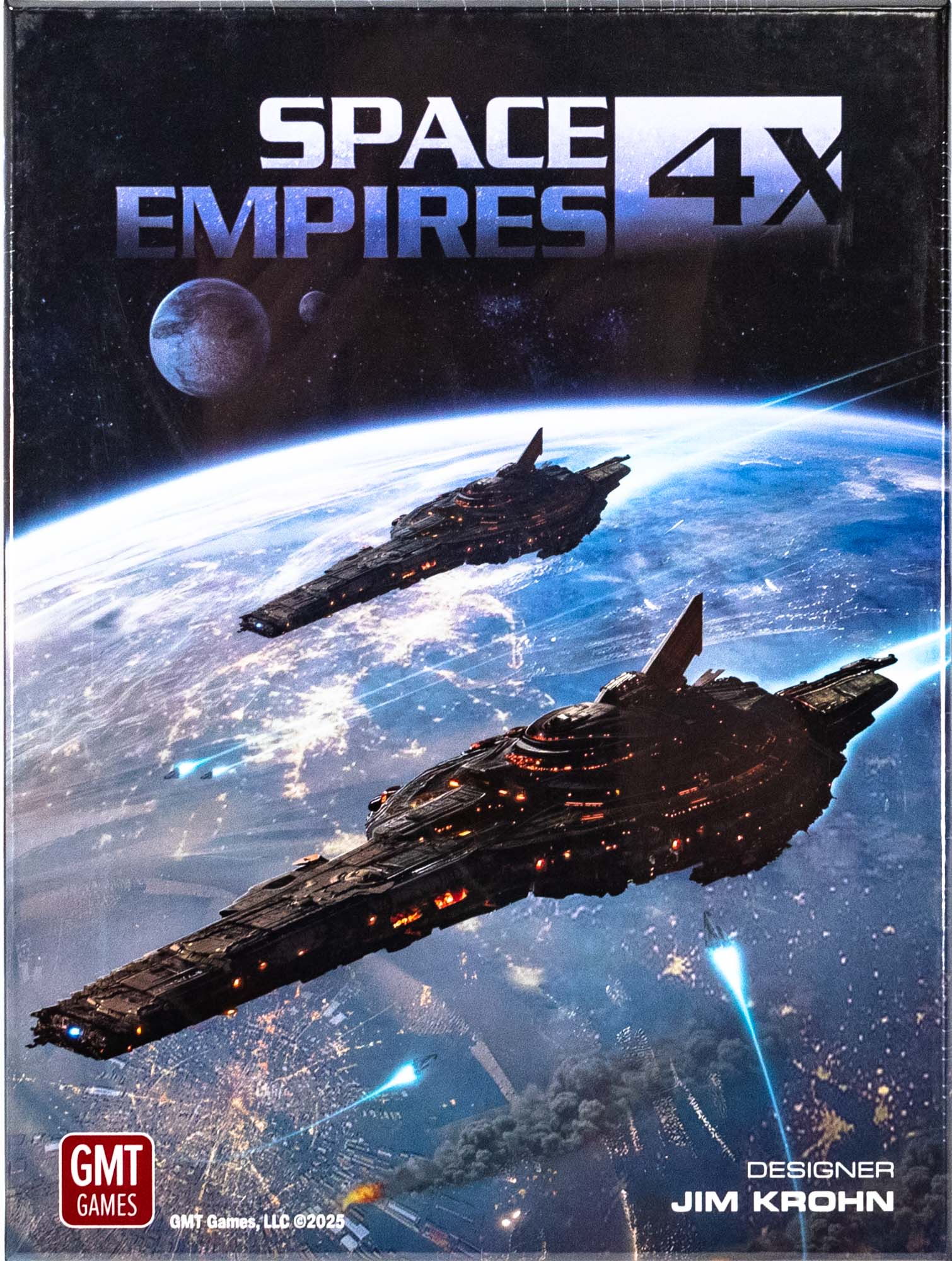 (As a side note, this function is essentially mirrored in GMT’s Space Empires 4X and TALON – simpler, solid games that lack the Trek theming)
Beyond the battles themselves, F&E checks the war game boxes. You’ll earn economic points from your conquered planets, naturally spending them on all matters military. Buy some drones, repair some ships, and so on. Supply needs to be traced. Faction asymmetry, like Star Fleet Battles, is pronounced, but not so wild as to make it hard to track. F&E isn’t Here I Stand, but you might have some big bruising ships of the Gorns running up against the Klingon’s Zerg-like swarm (sometimes a man just has to mix his sci-fi properties). You can customize your ships, in a deep and delightful bit of design – maybe your cruisers need more drone detachments, or your carriers stronger shields. Those are basic examples, but the options are endless.
Which is where we come to what it takes to get into Federation and Empire. First and foremost, you’re going to want a copy of the base game. ADB runs the show now, but even an original Task Force Games copy from the 1980s works and, for a game of this size, is pretty inexpensive. Once you have a taste, you’ll wind up wanting to download a copy of the most updated rules (and, if you truly descend into this game’s endless universe, print them out, bind them, and potentially use them as a blunt form of self-defense in a crisis) anyway. Play a bit with just the core game, whet your appetite, and then start adding on supplements, starting with Fighter Operations. Most supplements add on new scenarios, new ships, and, yes, new rules.
The monster becomes more monstrous, but in a good way.
So what, then, are we looking at?
Both Star Fleet Battles and Federation and Empire have been in print more or less continuously since the mid 1980s. That achievement shows both the appeal of the Star Trek universe and the strength of both games’ underlying systems. There’s undoubtedly a classic feel to these, an amount of cruft that would get sanded away if either emerged for the first time today. Yet, just like Advanced Squad Leader, all those nuts and bolts, those phasers and warp speed engines, the immersion here is unmatched for Trek or sci-fi war gaming fans. If that’s you, these two games might be the greatest tabletop adventure of your life.
To boldly go, indeed.


