
To those of you in the US, 2026 marks the country’s 250th anniversary since its declaration of Independence. As that seminal anniversary nears, we’re running a series of pieces on games that, in turn, cover some of the great, often messy, history of this country. So, naturally, we begin with a series on a war that tore the US apart.
Multi-Man Publishing’s Great Campaigns of the American Civil War (GBACW) has been rollicking tables for several decades now (the series began under Avalon Hill) with its engaging, very playable, and special titles. It’s ideally situated for any war gamer, even novices, that want to dive into the grit and heroism of the Civil War. If that’s you, or if you just want to appreciate some well-crafted hex-and-counter, then read on.
Series Overview and How to Play
Rather than an all-encompassing game like U.S. Civil War, the games in GCACW focus on particular campaigns. Each one sports a series of smaller scenarios and one or more campaigns. Take volume 8 in the series, Battle Above the Clouds. Here you’ll get two introductory scenarios to ease you into the rules, and then five  actions that vary widely (cavalry engagements, mountain terrain skirmishes, fighting retreats, etc.). These are often playable in an evening, and culminate in two advanced campaigns combining all the elements you’ve explored into meaty ventures that’ll devour days.
All that time’s going to be well spent, because the rules here have been refined into well-oiled hex-and-counter goodness.
GCACW runs with a familiar play sequence, heavy on modified die rolls. Every round begins with a rolled weather event, followed by rolled initiative, and then alternating activations until both players pass. Recovery has you building and repairing fortifications and bridges, and then it’s on to the next turn. Wrinkles exist from game to game, but the core remains.
Unit actions are driven by fatigue and leaders – you’ll need to balance advancing or retreating with exhaustion, a mechanic that’s light on rules (depending on what you unit does, they’ll get a certain amount of fatigue) but big on choice. Do you push your army to the edge of exhaustion to catch an enemy off guard, or make measured progress to ensure multiple rounds of high quality combat?
Leaders are the glue that keeps your units together, particularly when you’re asking them to attack the enemy. A leader, though, can’t be in multiple places at once, so making sure you have your Jacksons, Lees, and Grants in the fray is huge, while catching an enemy force without a leader makes for a crushing victory. The interplay between these two elements makes the map and the armies feel alive, creating narratives rather than bland math followed by a die roll.
All this comes in service of scoring objectives, buttressed by points earned for causing casualties. The scenario variety is a boon here, as you’ll play differently whether you’re chasing or fortifying, plotting an ambush or setting up for a massive assault. Most GCACW games include a healthy mix, ensuring you’ll get tons of great gameplay from every box.
On the component front, the GCACW series uses gorgeous, high-quality paper maps and a plethora of counters that get markedly better as the series goes on. The older titles aren’t ‘bad’ in quality, but you’ll definitely see an uptick in component design as MMP takes over. Counters are plentiful, and you’ll want to use force boxes to keep larger groups organized, lest counter skyscrapers march over the South.
Because there’s no card play or hidden information involved, solo play is great in the traditional play-both-sides way. You’ll not find an AI or flowchart system here, but as dice are so involved, it’s easy enough to make a roll whenever there’s a choice to be made. The game size is appropriate for normal tables (your coffee table might not qualify, though), so if you have a spot to set these beauties up and take a few turns here and there, you’re in for solitaire goodness.
Best Games to Start
It’s cliché to say, yet again, that the best place to start with a war gaming series is with the battle or campaign you’re most interested in. I stand by that, but I’m going to make a qualification. With GCACW and other long-running series, I’d recommend looking at the most recent title first, for the simple reason that the included rules will be the most updated and clean.
Sure, you can download, print, and even spiral-bound a living rule set yourself, but doing so is just one extra step you can avoid by looking at the latest game in a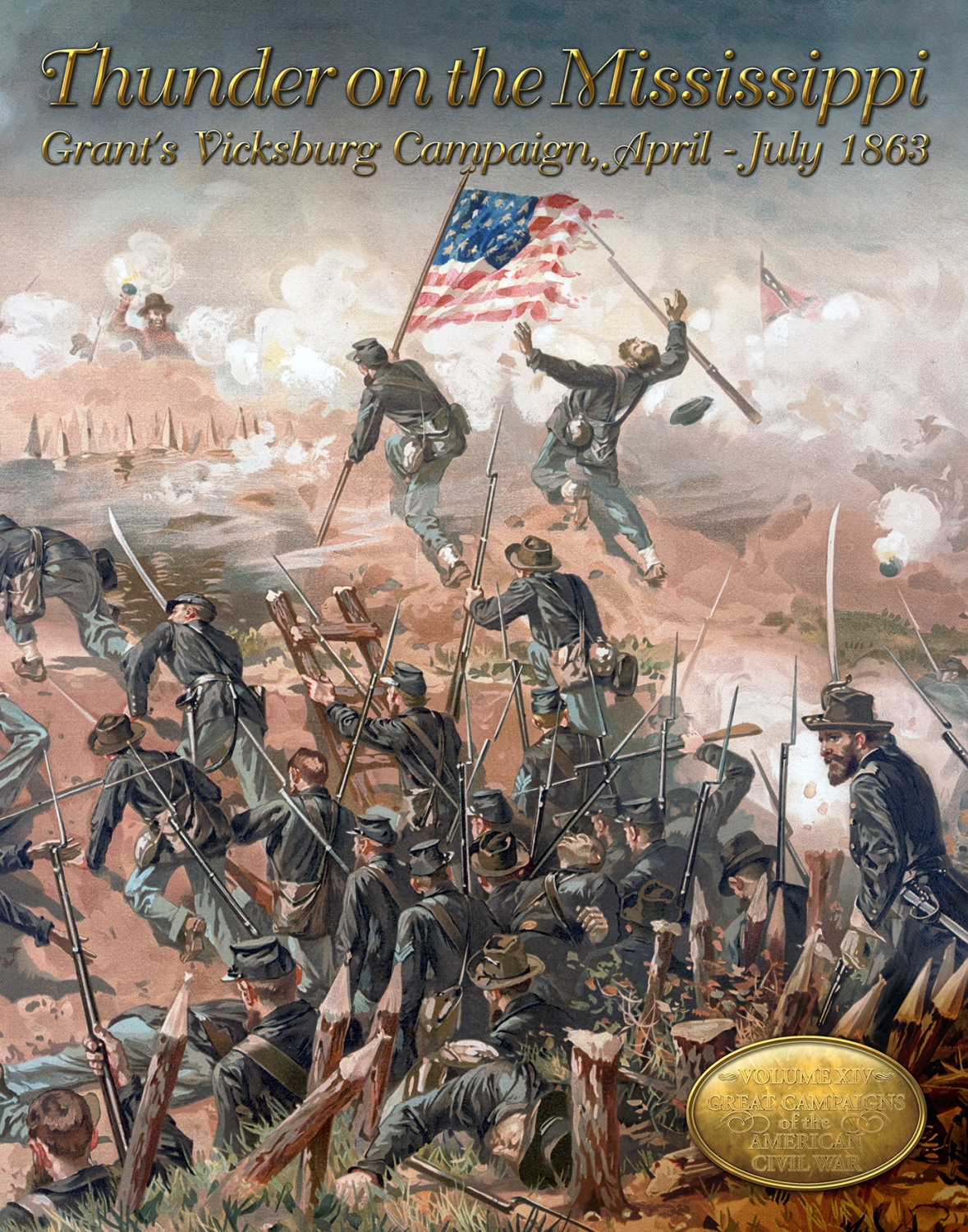 series. For GCACW, that’s 2024’s Thunder on the Mississippi.
Thunder is simply packed. 11 Basic scenarios and a monster campaign around Vicksburg, a spot rarely seen in war games. For newer war gamers, special rules abound in the scenarios, which can be a challenge, but working through them will teach you a key factor to enjoying war gaming in general: if you’re not playing in a competitive arena, ditching rules that aren’t to your liking is totally fine. Go for fun, explore unique strategies, and don’t hamstring yourself.
There’s another reason to recommend Thunder, and that’s availability. Older games in the GCACW series are harder to find and have a higher price as a result, a cost very much worth paying once you’re engaged with the series and know you’ll get the enjoyment from the game. War games, and board gaming in general, remains about the best entertainment bang-for-the-buck out there, and that’s not different here.
You’ll also find steeper discounts on the older Avalon Hill titles, which were designed by Ed Beach and Joseph Balkoski, who’ve continued to design virtually every game in the series. The components have some antique charm, they’re still great games, playable and often sprawling in their scope. Stonewall Jackson’s Way, for example, has scenarios you can finish in an hour, a great feel of movement across broad terrain, and easy to learn rules (even if you’re not trying to modernize it). Consider what your priorities are, and dive in.
Civil War Hex-and-Counter Series
GCACW is not, of course, the only US Civil War hex-and-counter game (or series). Here’s a few others worth checking out:
Blind Swords
Probably the most well-known system, the Blind Swords series of chit-pull games zooms to a tighter focus than GCACW. Its lighter rules, shorter scenarios/campaign play time, and lower price point make Blind Swords an excellent introduction to hex-and-counter war games in general, and the US Civil War theater as a whole. The mechanics also make for excellent solitaire play, if that’s your thing.
The Civil War Brigade Battle Series
A relative newcomer, 2019’s Antietam 1862 kicked off Worthington’s Civil War Brigade Battle Series, a set that’s now eight games long all with an intent for scenarios to play in a single evening. It’s an I-Go-You-Go design (where you’ll move your forces, then an opponent will move theirs) that incorporates most pieces of warfare in this era (artillery, cavalry charges, etc.) into a rulebook shorter than many pamphlets. Combined with mounted boards, thick counters, and plenty of dice-driven combat, for single-battle games, these are excellent.
The Black Swan System
Flying Pig Games’ fresh Black Swan system, which really came into its own with A Most Fearful Sacrifice (Gettysburg) is, well, huge. Sprawling, even. But the relatively light rules-load coupled with a fun card-draw system makes these big games a great time. Alternating activations that scale up to Corps level help control the force size. As per usual with Flying Pig, you’re getting top-notch components with mounted maps, thick counters, cards and custom dice to go with a bevy of scenarios.
The Great Battles of the American Civil War
With a name so close to ‘The Great Campaigns of the American Civil War’ that it trips me up every time, The Great Battles of the American Civil War is a long-running GMT Series that bumps up the complexity from the other games here to get you into the gnarly feel of being on the ground in these gritty battles. It’s not Advanced Squad Leader, but if you’re looking for a tactical system to engage with, GBACW will keep on giving. The chit-pull activation again makes its solo suitability strong. I’d also recommend the ‘Simple GBACW’ ruleset and various game packs for a streamlined take that loses little in gameplay.
Battle Cry
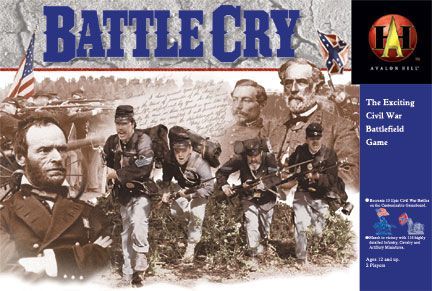 Last but certainly not least, and by far the most intro-friendly game here, Battle Cry is a classic battle game. Closer to Memoir ‘44 than hex-and-counter, Battle Cry puts figures onto packed maps with dice aplenty to buttress rules-light tactical play. Games wrap in under an hour, and you won’t spend that short time digging through charts or double-checking when cavalry activates or artillery fires. It’s just good fun – any edition works, because you’re cracking this one out for beer and pretzels war gaming any night of the week.


